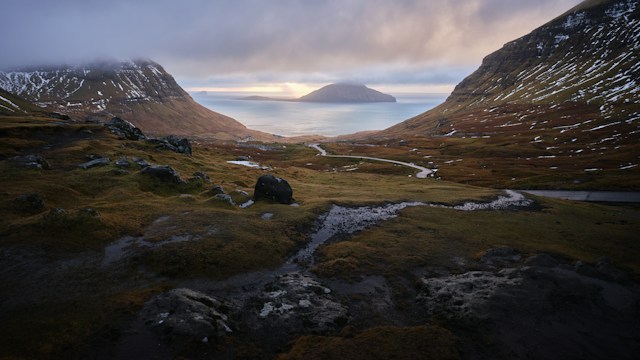
By Max Letek, Lost Land Travels · Prices checked October 2026
Yes, the Faroe Islands can be done on a budget, but only on a specific kind of budget. A solo traveller who flies from Edinburgh, camps, rides the buses and ferries on a travel card and cooks from the supermarket can do a week for roughly £550–£650 including flights. Hire a car, sleep in guesthouses and pay for the famous paid hikes, and that number doubles fast.
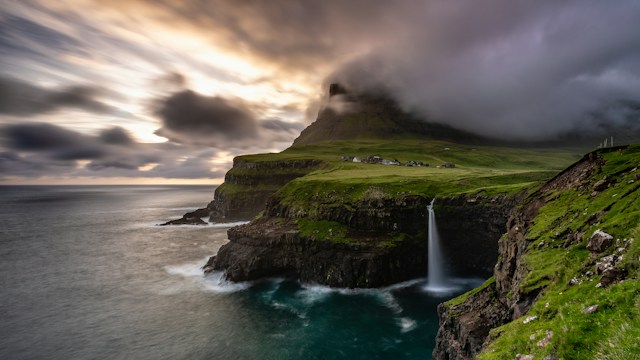
The Faroes are not cheap. But the islands' best asset, the landscape, is still mostly free to look at, and the public transport system is one of the most underrated bargains in Northern Europe. This guide breaks down what things actually cost in 2026, which fees are new, and where your money goes furthest.
Quick answer: how much does a week in the Faroe Islands cost?
Shoestring (solo, no car): about DKK 3,000 (£340) on the islands, plus flights from around £230 return. Total£570.
Smart mid-range (two people sharing a car and a guesthouse): about £1,200–£1,300 per person including flights.
Biggest costs: car hire, accommodation and eating out. Biggest savings: the 7-day bus-and-ferry Travel Card (DKK 700), campsites and supermarket food.
New for 2026: a DKK 20-per-night sustainability fee for visitors 16+ in paid accommodation, capped at DKK 200.
All figures use an exchange rate of roughly DKK 8.75 to £1 (autumn 2026). The Faroes use the Danish krone (they also print their own króna notes at par).
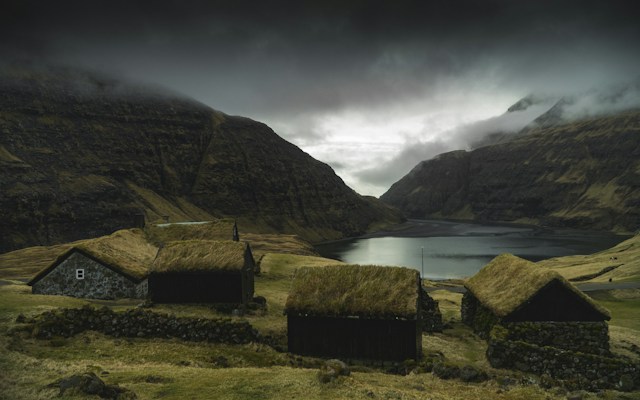
Why are the Faroe Islands so expensive?
The Faroes are expensive because almost everything is shipped in, the tourist season is short and capacity is tiny. Around 55,000 people live across 18 islands, and in 2023 roughly 130,000 foreign visitors arrived, more than double the resident population (Island Innovation).
That imbalance shows up in three places:
Car hire and accommodation. A small fleet and a limited number of beds sell out in June–August, and prices follow.
Food out. A mid-range dinner in Tórshavn typically runs DKK 250–450 per person
Access fees. Many of the most photographed viewpoints cross private farmland, and landowners have charged for access for years.
Travel writer Cat Ekkelboom-White summed up the shift neatly after a return trip: in the Faroes, "nature is free - or at least, it used to be" . The good news for budget travellers is that most trails are still free. You just need to know which ones.
Getting there: the cheapest way to reach the Faroes from the UK
For UK travellers, the cheapest route is a direct Atlantic Airways flight from Edinburgh, with return fares seen from about £228. The flight to Vágar Airport (FAE) takes about 1 hour 25 minutes.
Route | Operator | Season | Typical starting fare | Notes |
|---|---|---|---|---|
Edinburgh – Vágar | Atlantic Airways | Year-round | ~£228 return | Usually twice weekly |
London Gatwick – Vágar | Atlantic Airways | Summer only (from 23 May in 2026) | from ~£120 one-way at launch | Twice weekly, A320 |
Copenhagen – Vágar | Atlantic Airways, SAS | Year-round | Varies | Most frequent route; useful with a cheap UK–CPH flight |
Hirtshals (DK) – Tórshavn ferry | Smyril Line (MS Norröna) | Year-round | Couchettes are the budget option | ~30 hrs in summer, ~38 hrs in winter |
The Gatwick route is the newer option. Atlantic Airways brought it back for 2025 "by popular demand" , and the 2026 summer season started a week earlier, on 23 May . Fares started from £120 one-way when the route first launched.
Budget tip: if you live in the south of England, compare Gatwick against a low-cost flight to Copenhagen plus the Atlantic Airways connection. If you're in the north or Scotland, Edinburgh almost always wins.
The slow-travel alternative is Smyril Line's MS Norröna from Hirtshals in northern Denmark. The crossing takes about 30 hours in summer and 38 in winter (CruiseMapper). Shared couchettes, with four to six bunks per compartment, are the budget berth. It only makes financial sense if you're already in Denmark or want to bring your own car or campervan.
Search Edinburgh–Faroe Islands flights on Skyscanner →
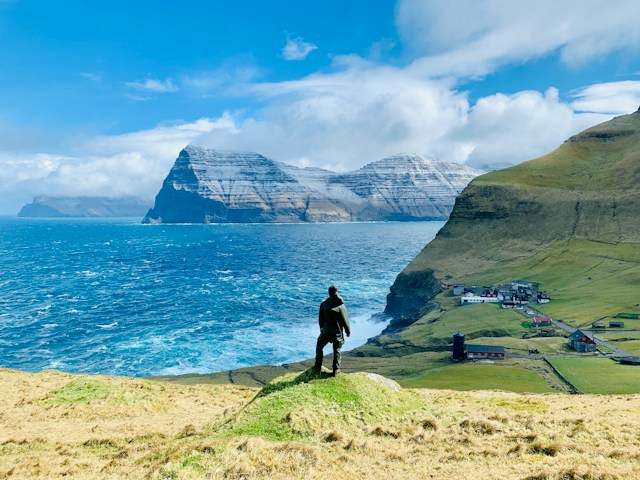
Getting around: Travel Card vs hire car
The single best budget decision you can make in the Faroes is buying the SSL Tourist Travel Card. For DKK 700 (≈ £80) you get seven days of unlimited travel on the national blue buses and ferries (Strandfaraskip Landsins).
Travel Card | Adult | Child |
|---|---|---|
4 days | DKK 500 (≈ £57) | DKK 250 |
7 days | DKK 700 (≈ £80) | DKK 350 |
You can buy it at the Tórshavn ferry terminal, the Vágar Airport information desk, or on the airport bus (Route 300). It does not cover the Mykines ferry, vehicles, pre-booked seats or special event sailings. Once you use it, it runs for consecutive days.
To put the value in context, a single foot-passenger ferry to Suðuroy costs DKK 109 each way at the standard fare, and a return to Kalsoy, Svínoy or Nólsoy costs DKK 131 (SSL prices). Two island day trips and the airport bus and the card has paid for itself.
Bonus: Tórshavn's red city buses (Bussleiðin) have long been free to ride, an initiative dating back to 2007 (Transit Maps). Locals have discussed a fare for non-residents, so check before you rely on it.
What a hire car really costs
A car gives you freedom, but the sticker price is only half the story. Small cars average around €79–92 a day across the year, but July averages climb to €160–170 a day (KAYAK). Then add the subsea tunnel tolls, charged automatically by number plate:
Tunnel | Connects | Rental car toll |
|---|---|---|
Vágatunnilin | Vágar (airport) – Streymoy | DKK 100 return (£11.33) |
Norðoyatunnilin | Eysturoy – Klaksvík | DKK 100 return (£11.33) |
Eysturoyartunnilin | Tórshavn – Eysturoy | DKK 175 each way (£19.83) |
Sandoyartunnilin | Streymoy – Sandoy | DKK 175 each way (£19.83) |
Rental car prices as published by the tunnel company; your hire firm bills you and may charge differently (Tunnil).
One return trip through the Eysturoy tunnel, the undersea roundabout everyone photographs, costs DKK 350. Do it three times and that's over £120 in tolls alone.
Our verdict: solo travellers and couples on a tight budget should go car-free. Groups of three or four can make a car work, especially in shoulder season, if they plan routes to minimise tunnel crossings.
The helicopter hack (use it fairly)
Atlantic Airways runs a state-subsidised helicopter service to remote islands. Tourists can book one-way only, so you fly one leg and take the ferry back (Prince of Travel). Since 2022, non-residents pay a higher fare than locals, so expect it to cost more than the old "£20 helicopter ride" legend. It's still one of the most memorable bargains in Europe. Remember these seats exist for islanders first.
Where to sleep cheaply in the Faroe Islands
Camping is the cheapest legal way to stay in the Faroes, and it is the only way to get the nightly cost close to UK campsite prices. There are now 20+ designated campsites, from Tórshavn to small islands such as Mykines, Kalsoy and Fugloy (Visit Faroe Islands).
Two rules matter:
Wild camping is illegal. Camping or sleeping in a vehicle outside designated sites is punishable by a fine (Visit Faroe Islands camping brochure).
Many sites are tent-only, and most open roughly May to September.
The official camping brochure lists Tórshavn Camping at around DKK 100 per person per night, with electricity extra. Full prices for every site are on camping.fo.
Accommodation type | Typical price | Best for |
|---|---|---|
Campsite (tent) | £7 - 17 pp per night | Shoestring, summer only |
Hostel / guesthouse room | From £70 per room per night | Solo travellers and couples outside July |
Budget hotel, Tórshavn | From £70–90; averages £164 | Short stays, shoulder season |
Hotel figures from HotelsCombined. The handful of hostels and guesthouses, such as Giljanes Hostel near the airport, sell out early in summer, so book as soon as you have flights.
Compare Faroe Islands stays on Booking.com →
The new sustainability fee (from 1 February 2026)
Since 1 February 2026, visitors aged 16 and over staying in paid accommodation pay DKK 20 per night, capped at DKK 200 (£22.60) per trip (Visit Faroe Islands). That's about £2.30 a night, and your host decides how it's collected. The money goes into a government fund for trails, nature protection and tourism planning. On a budget it's a rounding error, but build it in.
Eating on a budget
Self-catering from supermarkets is how you keep food under DKK 200 (£23) a day. Eating out is where Faroese budgets quietly collapse: a basic meal with a drink at an inexpensive restaurant in Tórshavn is around DKK 150 (£17), and a fast-food combo about DKK 130 (£15)
Item (Tórshavn) | Approx. price |
|---|---|
Loaf of bread | DKK 28 (£3.17) |
Dozen eggs | DKK 38 (£4.31) |
Basic restaurant meal + drink | DKK 150 (£17) |
Restaurant main course | DKK 140–250 (£15-28) |
Mid-range dinner per person | DKK 250–450 (£28- 51) |
Restaurant ranges from Hello Travel, which also notes service is usually included, so tipping isn't expected.
How to eat well for less:
Shop at Bónus first. It's the discount chain in the same group as Tórshavn's Miklagarður supermarket, and locals lean on its own-brand "First Price" range (KVF).
Pack lunch for every hike. Villages like Gjógv, Saksun and Tjørnuvík have few or no shops.
Bring dry staples from home in hold luggage: porridge oats, coffee, snacks, dehydrated meals for camping.
Plan alcohol. Beer and wine stronger than supermarket strength are sold through the state-run Rúsdrekkasøla shops, which keep limited hours, so buy duty-free on arrival if you want a drink.
Make one splurge count. A heimablídni (home-hospitality dinner in a local's house) is the most authentic meal on the islands. It isn't cheap, at around DKK 790 per person for one Tórshavn supper club (Visit Faroe Islands), but it's a better use of money than three forgettable café dinners.
Hiking fees: which trails are free and which aren't
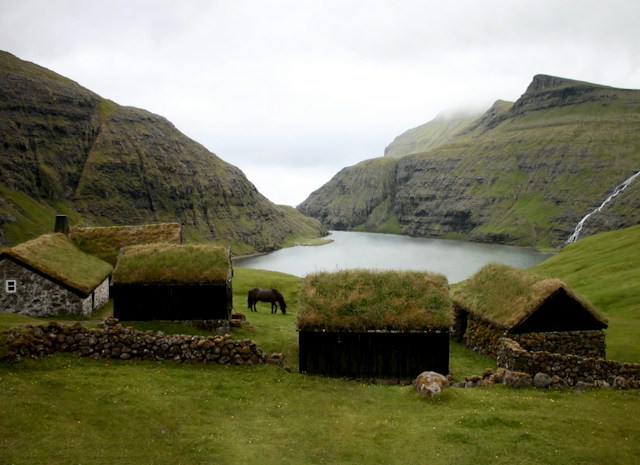
Most Faroese hikes are free, but the handful of Instagram icons are not. Visit Faroe Islands currently lists mandatory fees on these routes (Visit Faroe Islands):
Hike | Fee per adult | Guide | Notes |
|---|---|---|---|
Drangarnir sea stacks (Vágar) | DKK 600 (£68) | Mandatory | Guided only, April–October |
Mykines (1 May – 31 Aug) | DKK 500 (DKK 400 online) + ferry (£56.67) | Mandatory | Lighthouse path closed after a landslide |
Trælanípa / "floating lake" (Vágar) | DKK 450 guided, DKK 200 unguided (£51 / £22.67) | Optional | Under-7s free |
Kallur Lighthouse (Kalsoy) | DKK 200 (£22.67) | No | Ages 13–17 DKK 100; card accepted |
Villingardalsfjall (Viðoy) | DKK 200 (£22.67) | No; Enniberg needs a guide | Cash in a mailbox at the gate |
Nólsoy | Free for independent hikers | No | DKK 100 fee applies only to commercial tours |
The Mykines ferry adds DKK 153 each way at the standard fare, or DKK 123 if booked online (SSL). With the island fee, a puffin day trip easily passes DKK 650 per person. It's the single most expensive day in most Faroes itineraries.
Why the fees exist, and what's changing
Until recently, access rules rested on an agricultural law written long before tourism. As Oyvindur av Skarði of the Faroese trade ministry put it, the old right to walk traditional paths came from "the agriculture law from 1937" (Suston Magazine). Parliament passed a Sustainable Tourism law in 2024 to regulate when landowners may charge. Visit Faroe Islands says the new legislation will affect these fees, so check its hiking page in the week before you travel.
Brilliant free hikes and viewpoints
These are free to walk at the time of writing:
Klakkur above Klaksvík (Borðoy): short climb, huge views over the northern isles.
Hvíthamar viewpoint (Eysturoy): one of the best panoramas for the effort.
Tjørnuvík trail (Streymoy): coastal hiking from a black-sand surf village.
Skansin fort and Tinganes in Tórshavn: free, open at any time, and walkable from the bus terminal.
Árnafjørður – Toftaskarð – Katlarnir loop: remote and demanding.
Free-trail status per Moon & Honey Travel. Before any hike, check the weather, leave your route with someone, and stay on marked paths. Faroese fog moves in fast.
Sample budgets: what a week in the Faroes really costs
A shoestring week costs about £570 per person including flights; a smart mid-range week for two sharing a car costs about £1,250 each. Both assume summer travel, seven nights and the 2026 prices quoted above.
Shoestring: solo, car-free, camping
Cost (7 nights) | DKK | £ |
|---|---|---|
Return flight, Edinburgh | – | 230 |
Campsite, 7 nights at ~DKK 100 | 700 | 80 |
Sustainability fee, 7 × DKK 20 | 140 | 16 |
7-day Travel Card (covers airport bus) | 700 | 80 |
Supermarket food, ~DKK 175 a day | 1,225 | 140 |
One paid hike (e.g. Kallur Lighthouse) | 200 | 23 |
Total | 2,965 + flight | 570 |
Smart mid-range: two people, car, guesthouse (per person)
Cost per person (7 nights) | DKK | £ |
|---|---|---|
Return flight, Edinburgh | – | 230 |
Guesthouse room at ~£100 a night, shared | – | 350 |
Sustainability fee | 140 | 16 |
Small hire car, 7 days at ~DKK 800, shared | 2,800 | 320 |
Tunnel tolls (~DKK 900 for the trip), shared | 450 | 51 |
Fuel, shared | 300 | 34 |
Food: supermarket plus two meals out | 1,750 | 200 |
Kallur + unguided Trælanípa | 400 | 46 |
Total | ≈ 1,250 |
Add Mykines in puffin season and the mid-range figure rises by about DKK 650–800 (≈ £75–90) per person. Car hire is the swing factor: in July it can cost double the yearly average, so the same trip in May or September is noticeably cheaper.
Not included: travel insurance (make sure your policy explicitly covers the Faroe Islands, as they sit outside the EU) and getting to your UK departure airport.
12 ways to save money in the Faroe Islands
Buy the 7-day Travel Card (DKK 700) and plan days around bus and ferry timetables.
Fly from Edinburgh, or compare Gatwick (summer only) against a cheap flight to Copenhagen plus a connection.
Travel in May, early June or September. Car hire and rooms are far cheaper than in July, and the days are still long.
Camp at designated sites; never wild camp.
Base yourself in Tórshavn for free city buses, the biggest supermarkets and the main bus terminal.
Book SSL ferries online. The online fare is around 20% lower than buying at departure, e.g. DKK 123 vs DKK 153 to Mykines.
Choose free hikes first and pay for at most one icon.
Pick Trælanípa unguided (DKK 200) instead of guided (DKK 450) if you're confident on easy paths.
If you hire a car, plan around the tunnels. Group your Eysturoy and Klaksvík days to avoid repeat DKK 175 crossings.
Fly the helicopter one way, ferry back, where timetables allow.
Self-cater and pack lunch for every day out; village shops are rare.
Buy duty-free alcohol on arrival, since stronger drinks are only sold in state shops with limited hours.
The verdict: is a budget trip to the Faroe Islands actually possible?
Yes, a budget trip to the Faroe Islands is possible, provided your definition of budget is "cheap for the Nordics", not "cheap for Europe". At around £570 for a week, a car-free camping trip costs less than many city breaks to Copenhagen or Oslo, and it puts you in front of some of the most dramatic coastline in the North Atlantic.
The trade-off is time and flexibility. Buses don't reach every trailhead on your schedule, campsites are summer-only, and the weather will cancel at least one plan. If you can live with that, the Faroes reward slow, frugal travel more than almost anywhere I cover on Lost Land Travels.
If what you want is a car, a cosy guesthouse, the puffins on Mykines and dinner out every night, budget closer to £1,500–£2,000 per person for the week, and book everything months ahead.
Faroe Islands on a budget: FAQs
How much money do I need for a week in the Faroe Islands?
A solo traveller camping and using public transport needs about DKK 3,000 (≈ £340) on the islands, plus a return flight from around £230. A mid-range trip for two with a hire car and guesthouse costs about £1,250 per person including flights.
What is the cheapest month to visit the Faroe Islands?
May and September are the best-value months for a budget trip. Car hire and rooms are cheaper than in July, days are long, and campsites are usually open. Winter is cheaper again for flights, but camping closes and daylight is short.
Can you visit the Faroe Islands without a car?
Yes. The SSL Tourist Travel Card gives unlimited bus and ferry travel for DKK 500 (4 days) or DKK 700 (7 days), and Tórshavn's red city buses have long been free. Some trailheads have infrequent services, so plan around the timetable.
Is hiking free in the Faroe Islands?
Most hiking is free. A few popular routes on private land charge mandatory fees, including Kallur Lighthouse (DKK 200), Trælanípa (DKK 200 unguided), Mykines (DKK 500, guide included) and Drangarnir (DKK 600, guided only).
Is there a tourist tax in the Faroe Islands?
Yes. Since 1 February 2026, visitors aged 16 and over in paid accommodation pay a sustainability fee of DKK 20 per night, capped at DKK 200 per stay.
Can you wild camp in the Faroe Islands?
No. Camping or sleeping in a vehicle outside designated campsites is illegal and can be fined. There are more than 20 official campsites.
Are the Faroe Islands cheaper than Iceland?
The two are broadly comparable. Flights from the UK to the Faroes usually cost more than to Iceland, but the Faroes' compact size and the Travel Card make a car-free trip far easier than in Iceland.
About the author
Max Letek is the founder of Lost Land Travels, a UK travel guide to off-the-beaten-path destinations with a no-tourist-traps approach. He has more than 15 years in digital marketing and research-led content, and writes practical, price-checked guides for independent travellers.
How we priced this guide: every fee, fare and toll was checked against the official operator in October 2026: Strandfaraskip Landsins for buses and ferries, Tunnil for tunnel tolls, and Visit Faroe Islands for hiking and sustainability fees. Flight, car and hotel prices are snapshots from booking sites and will move with the season. Prices are converted at about DKK 8.75 to £1.
Affiliate disclosure: Lost Land Travels may earn a commission if you book through links on this page, at no extra cost to you.