By Max Letek, Lost Land Travels. Fact-checked against FCDO advice updated 13 August 2026.
The road from Sarajevo to Mostar is one of Europe's great short drives: about 130 km down the Neretva valley, past turquoise lakes, Ottoman bridges, a Cold War bunker and a dervish house built into a cliff. Most visitors rush it as a day trip from Dubrovnik. Five days lets you see it properly.
This itinerary starts in Sarajevo, a city that survived “the longest siege of a capital city in the history of modern warfare”, and ends among the waterfalls and fortress villages south of Mostar. Along the way, it covers car hire, the scenic train alternative, and the landmine rules every driver here needs to know.
In this guide
The route at a glance
The whole loop is under 300 km of driving, so no day has more than about two hours at the wheel.
Day | Route | Approx. distance | Approx. drive time | Overnight |
|---|---|---|---|---|
1 | Sarajevo city (Tunnel of Hope at Butmir) | 15 km | 30 min | Sarajevo |
2 | Sarajevo → Konjic → Jablanica | 85 km | 1h 30m | Konjic or Jablanica |
3 | Jablanica → Mostar | 50 km | 1 hour | Mostar |
4 | Mostar → Blagaj → Počitelj → Kravica → Mostar | 90 km loop | 2 hours | Mostar |
5 | Mostar → Sarajevo, or on to Dubrovnik | 130 km to Sarajevo | 2–2.5 hours | — |
Distances and times are approximate; allow extra time for mountain roads and photo stops. Not driving? The Sarajevo–Mostar train covers 129 km in “just 1h55” on “an incredibly scenic” line, for 14.10 BAM in second class.
The 5-day itinerary
Day 1: Sarajevo, where East meets West
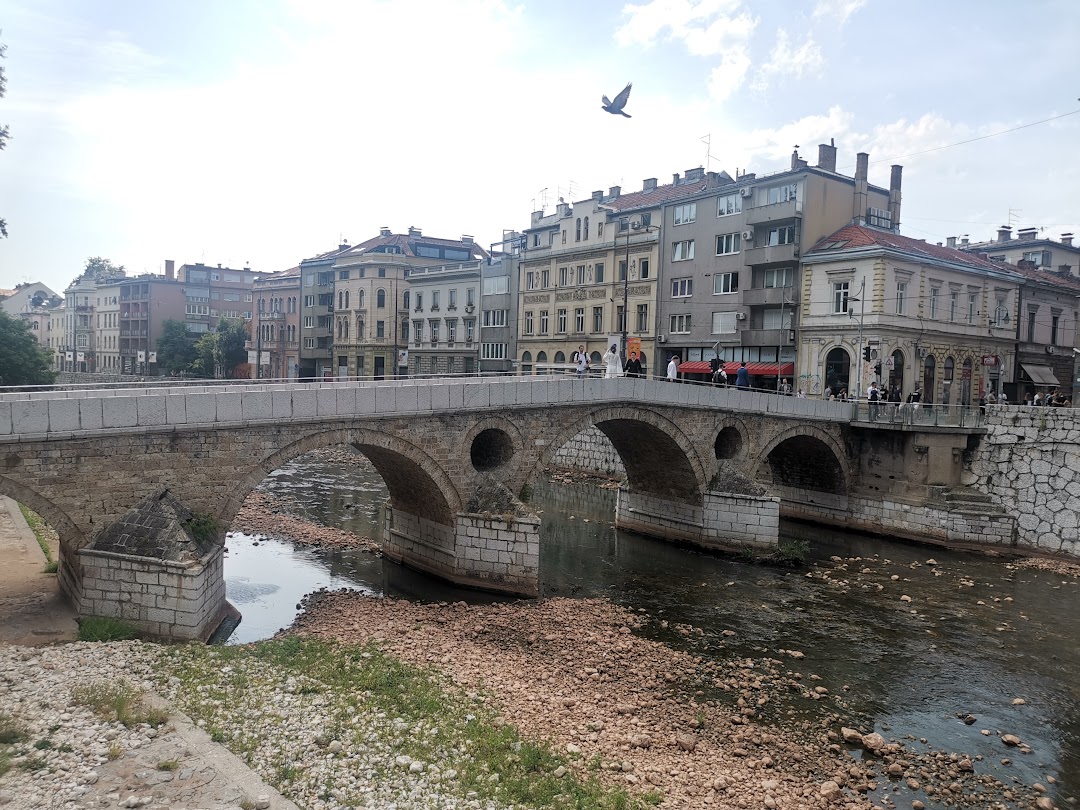
Spend the morning in Baščaršija, the Ottoman bazaar quarter, then walk west along Ferhadija into the Austro-Hungarian city. Stop at the Latin Bridge, where Archduke Franz Ferdinand was assassinated in 1914.
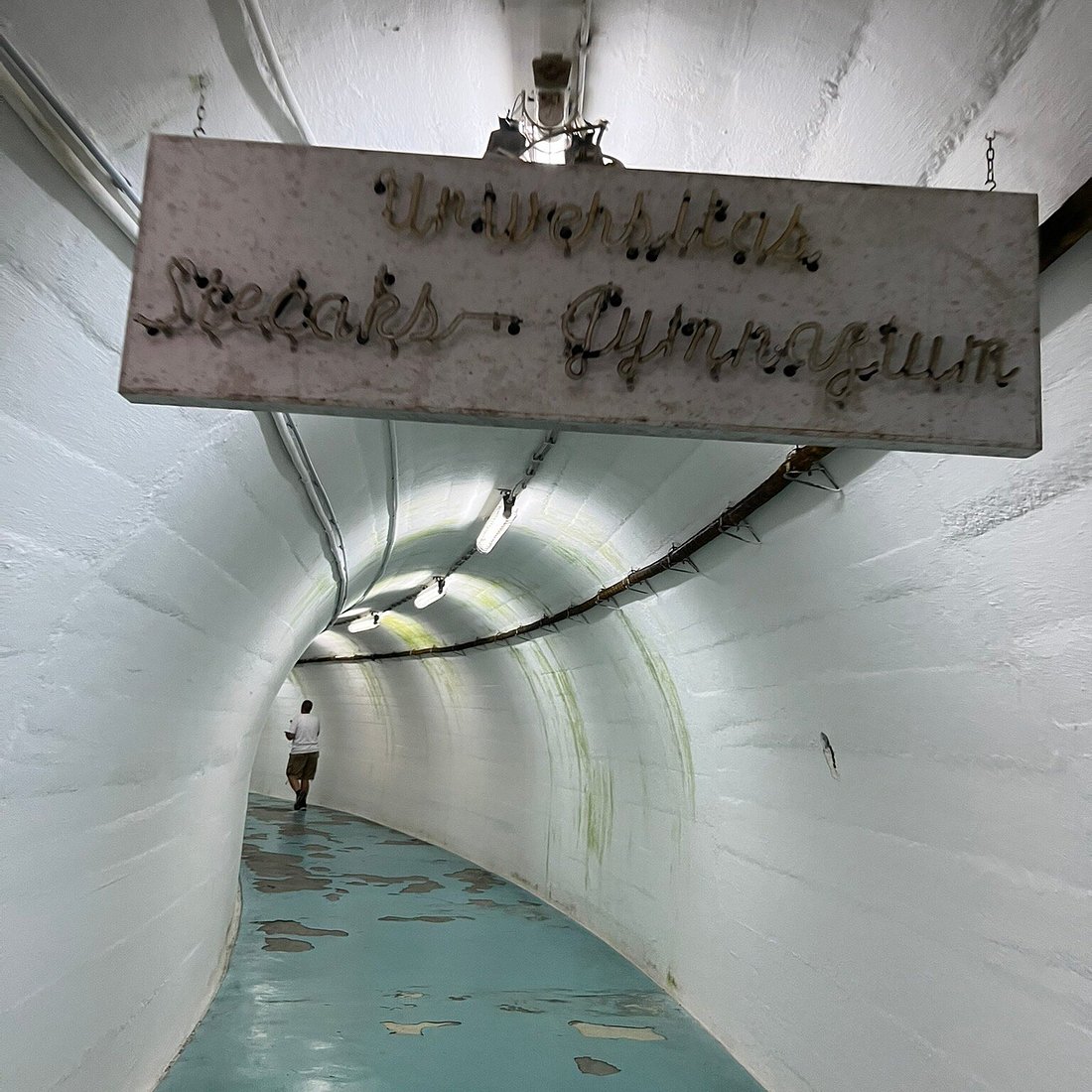
In the afternoon, pick up your hire car and drive 15 km to the Tunnel of Hope in Butmir. During the siege, which lasted 1,425 days from 5 April 1992 to 29 February 1996 and killed 13,952 people, this tunnel under the airport runway was the city's lifeline. It was dug in four months in 1993; today about 125 m can be walked. Entry is 20 KM for adults, cash only.
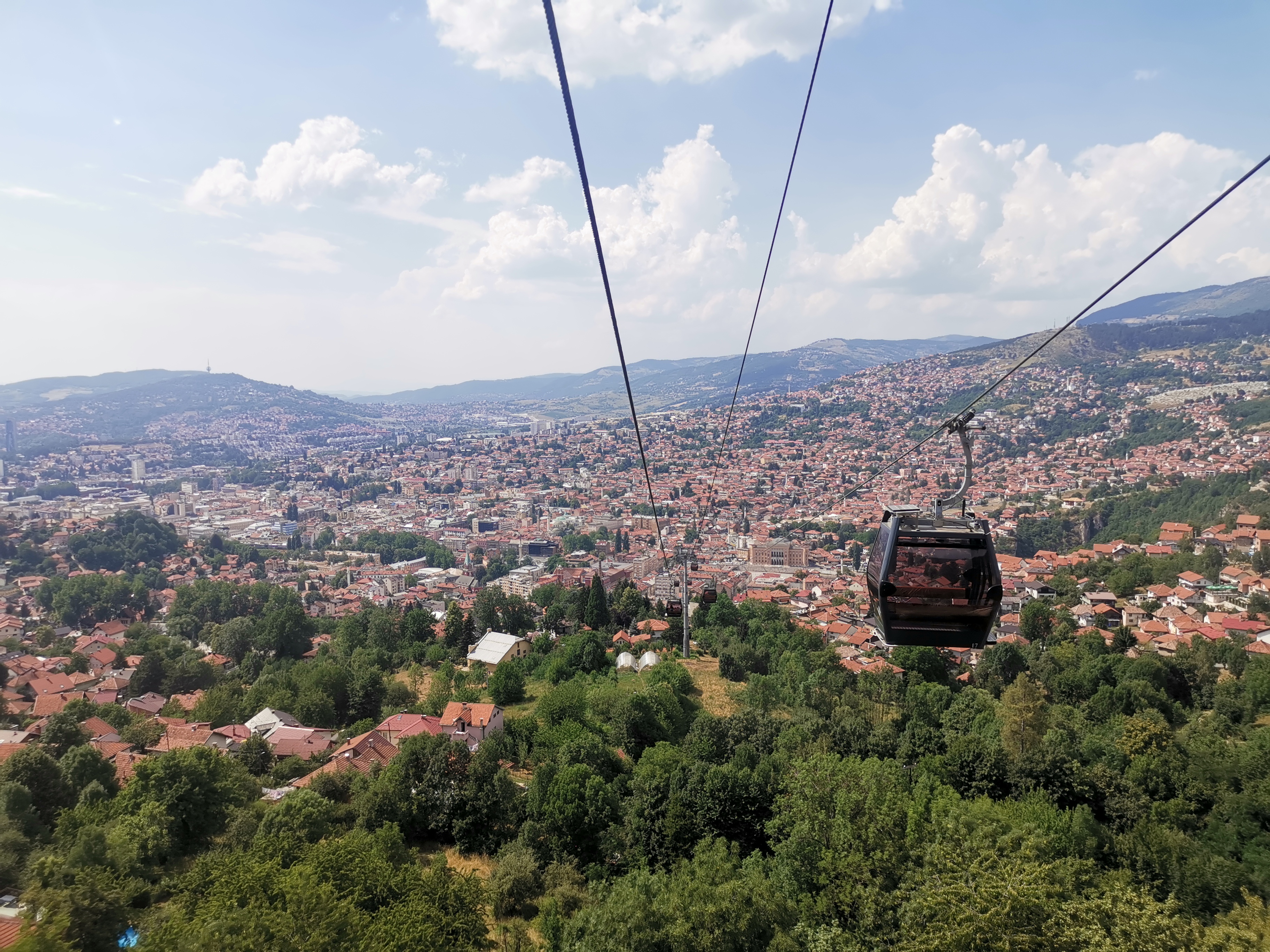
End the day with ćevapi in Baščaršija and the cable car up Mount Trebević for sunset over the city. The FCDO notes a rise in thefts from cars “particularly on Mount Trebevic”, so leave nothing visible inside.
Day 2: Konjic and Tito's secret bunker
Drive about an hour southwest to Konjic, a riverside town with an Ottoman stone bridge and the Neretva's best white-water rafting. Its big secret is ARK D-0, Tito's nuclear bunker, hidden inside Zlatar Hill behind three ordinary-looking houses. Wikipedia records that it was “built between 1953 and 1979” at a cost of US$4.6 billion, and that it covers 6,854 m² with “over 100 rooms”. It was designed:
“to withstand a 20-kiloton nuclear blast”
Visits are by guided tour only; arrange one in advance through a Konjic agency or your accommodation.
Continue 25 km along turquoise Lake Jablanica to Jablanica. Roadside grills here are famous across Bosnia for spit-roast lamb. Next to the river sits the wrecked railway bridge from the 1943 Battle of the Neretva, with a museum telling the story.
Day 3: The Neretva canyon into Mostar
The drive south from Jablanica is the most dramatic stretch of the route, with the road squeezed between limestone walls and the jade-green Neretva. Pull over at the lay-bys, but stay on the tarmac (see Landmines, below).
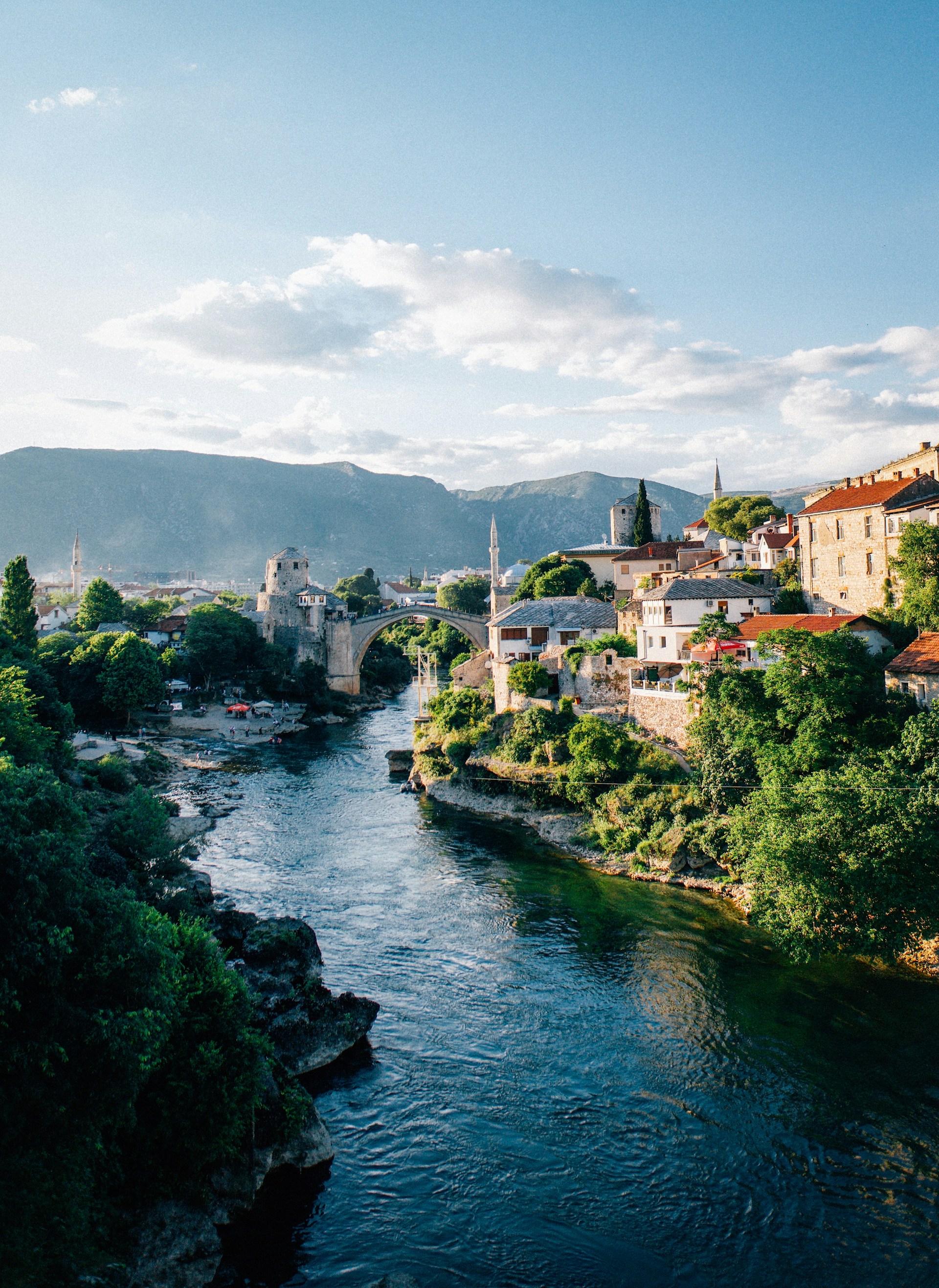
Arrive in Mostar by lunchtime. Stari Most, the Old Bridge, was completed in 1566–67, destroyed by shelling on 9 November 1993 and reopened on 23 July 2004. UNESCO listed the Old Bridge Area in 2005 and calls it:
“a symbol of reconciliation, international co-operation and of the coexistence of diverse cultural, ethnic and religious communities.”
— UNESCO World Heritage Centre
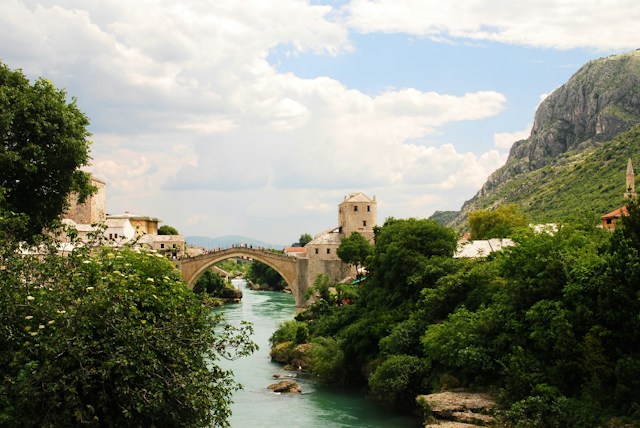
Watch the divers. Its traditional for the town's young men to leap from the bridge into the Neretva”, around 24 m down. Do not try it yourself: the FCDO warns that “diving off Mostar bridge is dangerous and has resulted in serious injuries and fatalities.”
Day 4: Blagaj, Počitelj and Kravica
This is the best day of the trip: three very different sights in a 90 km loop.
Blagaj (about 12 km): the dervish tekke sits beneath a cliff at the source of the Buna, which “ranks among the largest springs in Europe”. The tekke likely dates from around 1520. Arrive early before the tour buses.
Počitelj (about 30 km): a walled Ottoman village climbing a hillside above the Neretva. Climb to the fortress tower for the view.
Kravica (about 25 km more): a semicircular waterfall “about 28 m high” with a 120 m pool where “you can swim in the water amphitheater under the waterfall” in summer (Kravica). Check the current entry fee and opening hours on the official site.
Day 5: Back to Sarajevo, or on to the coast
Drive back to Sarajevo (about 2–2.5 hours), or drop the car and take the 06:33 or 17:09 train. Alternatively, continue to Dubrovnik, about 3 hours away, but check your hire company allows one-way rentals and cross-border driving into Croatia.
Driving in Bosnia: what you need to know
Driving this route is easy on main roads, but UK drivers need one document many forget: the 1968 International Driving Permit.
Licence and insurance
IDP: A UK licence alone is fine in your own car or one hired outside Bosnia. If you rent a car in Bosnia, you also need “the 1968 version of the international driving permit”, and you “cannot buy an IDP … outside the UK” (FCDO).
Insurance: “It's illegal to drive without at least third-party insurance.” If you drive in from Croatia and your cover isn't valid, buy “border insurance” at the crossing.
Cross-border hire: Tell the rental company if you plan to drive into Croatia or Montenegro; most charge a cross-border fee.
Winter rules
Between November and April, the FCDO says you must have winter tyres marked M+S with at least 4 mm of tread, and “carry snow chains and use them when road signs tell you to.” Hire cars should come equipped, but check at pickup.
Road rules and accidents
If you have an accident, “stay at the scene and do not move your vehicle until the police arrive.” For speed limits, compulsory kit and the alcohol limit, the FCDO points drivers to the RAC's Bosnia driving guide.
Landmines: stay on the tarmac
This is the rule that matters most. The FCDO warns:
“Landmines and other unexploded weapons remain from the 1992 to 1995 war. Do not step off roads and paved areas without an experienced guide.”
— FCDO travel advice, Bosnia and Herzegovina
Take particular care at road edges, in open countryside, in abandoned buildings and on untarred tracks. Use proper lay-bys and trails at sights such as Kravica and Blagaj, and never wander into a field for a photo or a toilet stop.
Practicalities: entry, money and timing
Entry rules for UK travellers
According to the FCDO:
You can visit “without a visa … for up to 90 days within a 6-month period.”
Your passport must have been issued less than 10 years before you arrive and be valid for at least 90 days after you plan to leave.
“All foreign nationals must register with the police within 72 hours of arrival.” Hotels usually do this for you; check if you're in a private rental.
Get your passport stamped on entry and exit, or you may be fined when you leave.
Money
The currency is the convertible mark (KM or BAM), pegged to the euro at roughly 2 KM to €1. Cards work in cities, but carry cash for the Tunnel of Hope (cash only), roadside grills and village car parks.
When to go
May–June and September–October are ideal: warm enough to swim at Kravica in early autumn, without Mostar's peak-summer heat and day-trip crowds. Winter is atmospheric in Sarajevo, but needs winter tyres and chains. Mostar's diving competition is held every year at the end of July.
Safety
Bosnia is generally safe for visitors. Beyond landmines and car theft, the FCDO flags pickpockets in Sarajevo, possible wildfires from April to October, and fog delays at Sarajevo airport in December and January. The emergency number is 112.
Travelling respectfully
The war is recent and personal. Listen more than you ask, and avoid taking sides on its politics.
Cover shoulders and knees in mosques, including at Blagaj; scarves are usually provided.
Tip the bridge divers if you photograph a jump; collecting money is how they earn a living.
Eat at family-run places: ćevapi, burek and Herzegovinian wines such as žilavka and blatina.
FAQ
How long is the drive from Sarajevo to Mostar?
About 130 km, which takes 2–2.5 hours without stops. With stops in Konjic and Jablanica, it makes a comfortable full day.
Is it better to drive or take the train from Sarajevo to Mostar?
The train is faster and very scenic: 1h55 for 14.10 BAM. Driving lets you add Konjic, Jablanica, Blagaj, Počitelj and Kravica, which the train can't reach.
Do I need an International Driving Permit in Bosnia?
Yes, if you hire a car in Bosnia: UK drivers need the 1968 IDP, which can only be bought in the UK.
Is it safe to drive in Bosnia and Herzegovina?
Yes, on main roads. Avoid driving at night on mountain roads, carry winter equipment from November to April, and never leave paved areas because of landmines.
Can you swim at Kravica waterfall?
Yes, in summer, in the 120 m pool beneath the 28 m falls. Check opening hours and fees on the official Kravica website.
How many days do you need for Sarajevo and Mostar?
Five days covers both cities plus Konjic, Blagaj, Počitelj and Kravica without rushing. Three days is the minimum for the two cities alone.
About the author
Max Letek is the founder of Lost Land Travels and has more than 15 years' experience in travel and digital publishing. He writes about destinations beyond the standard tourist circuit, checking every guide against official advice and primary sources.
Sources
FCDO travel advice: Bosnia and Herzegovina, including entry requirements and safety and security (updated 13 August 2026)
Easy Balkan Transfers: Tunnel of Hope visitor guide (April 2026)
Seat61: Sarajevo to Mostar by train (updated June 2026)